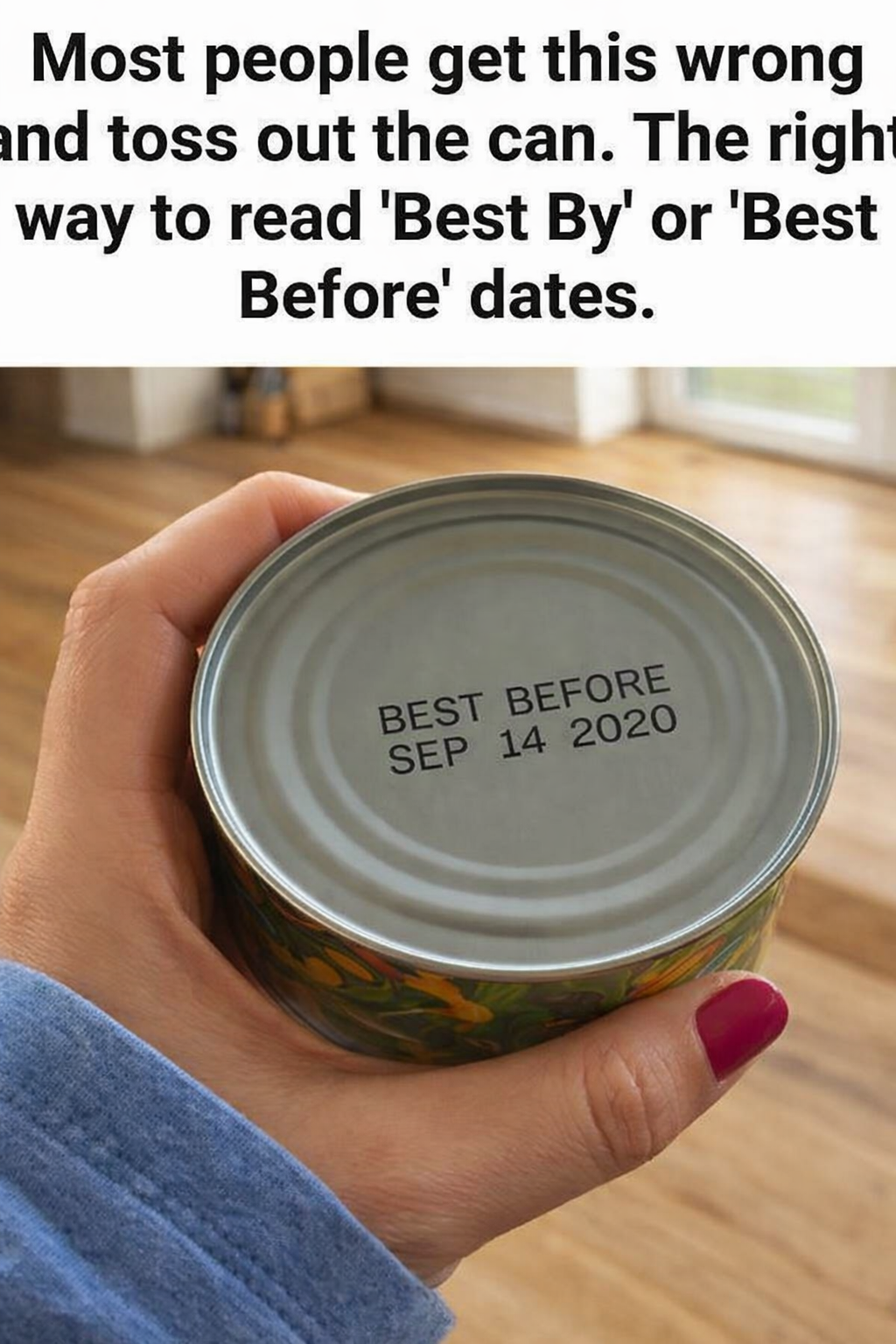
Most kitchens have a few canned goods tucked away—soups, beans, vegetables, or sauces saved for busy days. When the printed date passes, many people assume the food is no longer safe and throw it away. In reality, most dates on canned foods are not strict expiration deadlines. Labels like “Best By” or “Best Before” usually indicate peak quality, meaning the flavor and texture are expected to be best before that date, not that the food suddenly becomes unsafe.
It helps to understand the difference between quality and safety. “Use By” dates are more common on perishable foods such as dairy or fresh items and often refer to quality rather than safety. Properly stored canned goods are shelf-stable and can remain usable long after the printed date. Keeping cans in a cool, dry place away from heat and sunlight helps preserve their condition.
The type of food matters too. High-acid foods like tomatoes typically maintain best quality for about 12 to 18 months. Low-acid foods such as beans, corn, peas, and canned meats often last much longer—sometimes three to five years or more. While taste, color, and texture may slowly change, properly sealed cans can still be safe.
However, always inspect cans before using them. Bulging lids, deep dents along seams, rust that breaks the surface, leaks, strange odors, or spurting liquid are warning signs the food may be unsafe. Learning how to read labels and check for damage can help reduce waste, save money, and ensure safer choices in your kitchen.