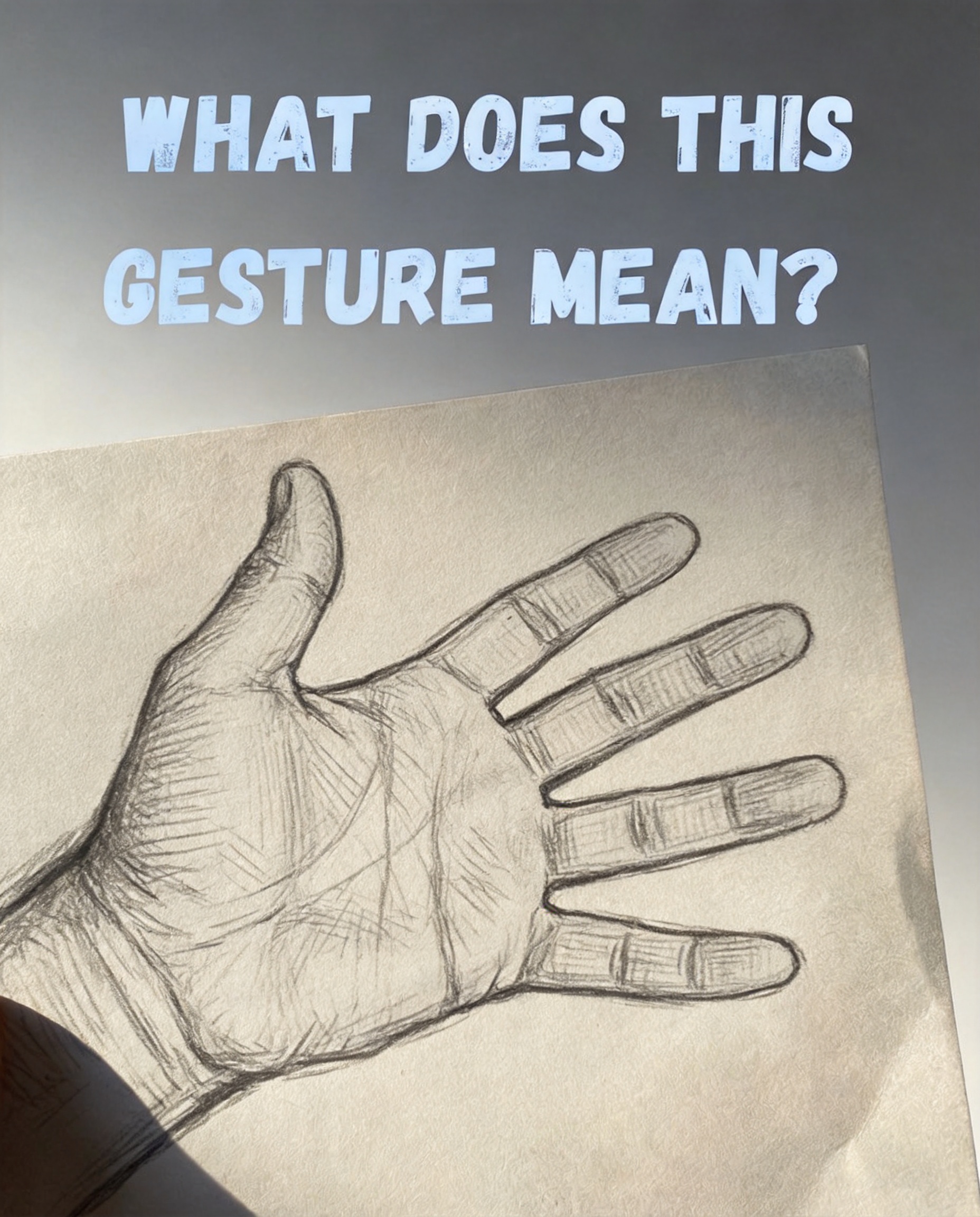
At first glance, it looks like a simple clenched fist—but notice the thumb tucked tightly between the fingers. This small detail turns an ordinary hand into an old gesture known in many cultures as “making a fig.” Long before instant messages and emojis, this quiet sign carried clear meaning. With one motion, people could refuse a demand, show mild defiance, or deliver a playful “not happening” without saying a word.
In 19th-century Europe, the gesture became a subtle way to express resistance without open conflict. A hidden thumb could reject authority, decline unfair requests, or tease someone who crossed a line. It also held symbolic meaning in folk traditions: the closed fist represented hidden strength, while the thumb was believed to protect against bad luck or the “evil eye.”
Over time, the gesture entered family life and childhood play. It was passed down as a harmless way to joke, stand firm, or respond to teasing. For some, it even appeared in emotional moments—small signs of comfort, courage, or reassurance during uncertain times. In this way, it became part of a quiet, unspoken language blending humor, protection, and confidence.
Today, the gesture is rarely used, replaced by digital communication and quick online reactions. Still, its meaning hasn’t completely disappeared. For those who remember it, the fig gesture remains a symbol of creative communication—proof that powerful messages don’t always need words, only subtlety and expression.